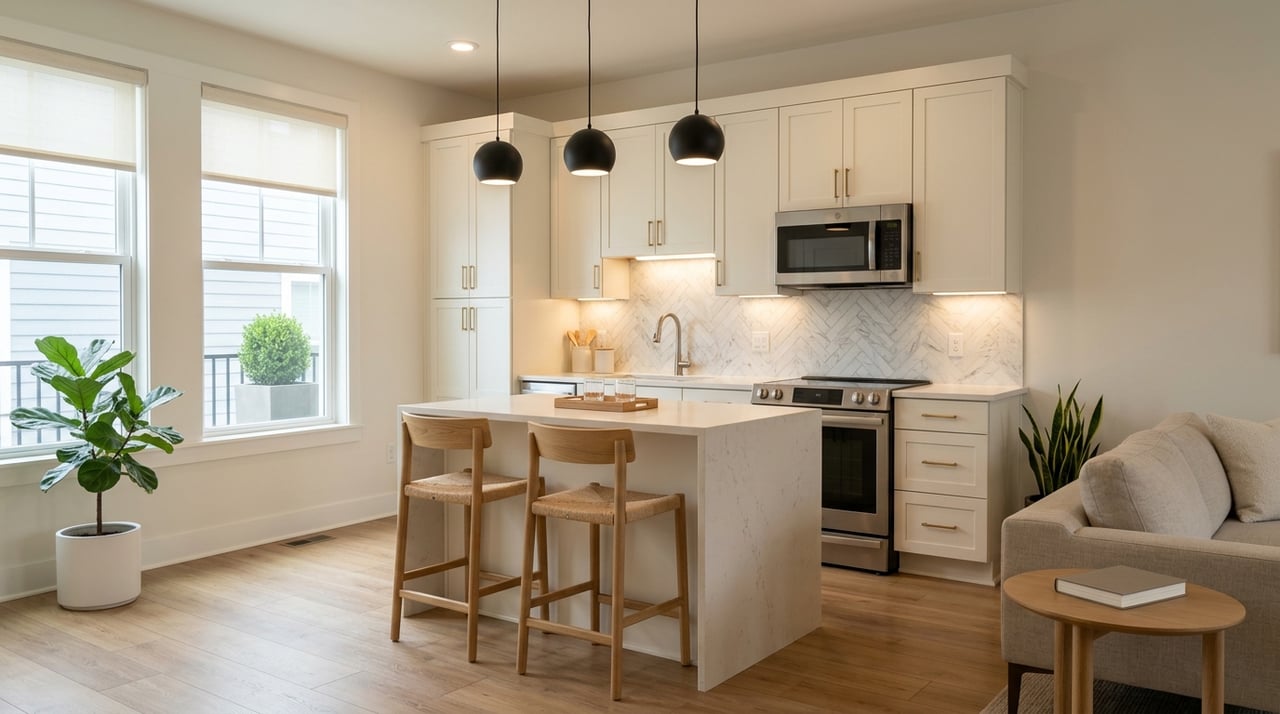
Thinking about downsizing in Alexandria but worried it might feel like giving something up? In many cases, the opposite is true. A smaller home here often changes your routine in practical, local ways that can make daily life simpler, more flexible, and easier to manage. If you want a clear picture of what really changes, from upkeep and monthly costs to parking and getting around, let’s dive in.
Why downsizing feels different in Alexandria
In Alexandria, downsizing is often less about leaving your community and more about changing how you use it. Instead of spending as much time on a yard, exterior upkeep, or a longer drive, you may rely more on shared building systems, nearby parks, and local transportation options.
That shift works especially well in a city with established walking, biking, bus, and rail options. Alexandria’s transportation network supports a more car-light routine than many suburban areas, which can make a smaller home feel like a lifestyle upgrade instead of a compromise.
Maintenance changes first
The biggest day-to-day difference for many downsizers is maintenance. When you move from a detached home into a condo or some townhome setups, you usually take on less direct responsibility for exterior tasks and more reliance on shared rules, services, and building management.
That can mean fewer weekend chores, but it also means you need to be comfortable with association structures and shared spaces. Your time may shift away from yard care and exterior repairs, but your routine may include building policies, monthly dues, and community processes.
Trash and recycling work differently
Alexandria’s own refuse rules show how daily life can vary by housing type. Detached single-family homes, duplexes, and some townhomes are required users of the city’s fee-based trash service, while condominium complexes are treated differently and may participate only at the city’s discretion.
For homes that receive city trash service, the city generally provides one 64-gallon trash can, except in Old Town. In some Old Town locations or limited-access townhome areas, approved trash containers may be required instead.
That may sound like a small detail, but it affects everyday living. In a detached home, you may be used to managing your own bins and pickup routine. In a condo, trash handling may be more centralized, which can feel easier, but also less independent.
Some services can make aging in place easier
If your downsize is partly about convenience, Alexandria does offer walk-out trash and recycling service for elderly and physically challenged residents. Yard waste is not included in that service, but it can still make a noticeable difference for people trying to simplify home tasks.
For many homeowners, this is part of the bigger appeal of staying in Alexandria. You can reduce physical upkeep without necessarily leaving the city you know.
Your monthly cost stack shifts
Many people assume downsizing always means sharply lower costs. Sometimes it does, but in Alexandria the better way to think about it is this: your costs often change shape more than they disappear.
A smaller home may lower your assessed value, which can reduce your real estate tax bill. As of the FY2026 budget, Alexandria’s real estate tax rate is $1.135 per $100 of assessed value.
But that is only one part of the picture. The city also lists a $500-per-can annual residential refuse fee and a $324.10 stormwater utility fee per equivalent residential unit. If you own a vehicle, Alexandria also taxes automobiles at $5.33 per $100 of assessed value.
Condo fees become a bigger factor
If you move into a condo, one of the biggest budgeting changes is the addition of monthly condo or HOA dues. Those fees are usually separate from your mortgage payment, so even if your mortgage goes down, your full monthly housing picture may not drop as much as expected.
In practical terms, downsizing can reduce one set of costs while introducing another. You may save on maintenance and possibly taxes, but building fees, parking costs, and vehicle taxes can offset part of that savings.
Here is a simple way to think about it:
| Before downsizing | After downsizing |
|---|---|
| More direct responsibility for exterior upkeep | More shared maintenance through dues or building systems |
| Larger home may mean higher assessed value | Smaller home may mean lower assessed value |
| Private yard and household systems to manage | Shared spaces and building rules to follow |
| Driving may be more central to errands and commuting | Walking, transit, and parking logistics may matter more |
Transportation becomes part of the lifestyle
One of the most Alexandria-specific changes is how much easier it can be to organize daily life around something other than your car. If you downsize into a more compact home near transit, trails, or a more walkable area, your routine may start to feel very different.
Alexandria’s Getting Around resources highlight walking, biking, bus, rail, ridesharing, and more. The city also says its bike network includes over 20 miles of trails, and it describes Alexandria as a nationally recognized Bike Friendly Community.
That matters because a smaller home can feel much bigger when the city itself becomes part of your usable space. Instead of focusing only on what sits inside your property line, you may start thinking more about access, convenience, and nearby connections.
Trails can replace some private outdoor space
Alexandria’s multi-use trails are physically separated from vehicle traffic and are designed to improve safety and comfort while offering alternatives to driving. For downsizers, that can be one of the best tradeoffs in the city.
You may have less private lawn or driveway space, but more direct access to public walking and biking routes. That is a very different experience from downsizing in a more car-dependent area.
DASH and Metro can reduce car dependence
For households trying to cut back on driving, DASH can be a practical substitute for a second car. Current core routes 30 through 36 run seven days a week, and some weekday service arrives every 10 to 15 minutes.
The King St trolley also runs every 15 minutes between King St Metro and City Hall/Market Square from 11 a.m. to 11 p.m. That kind of local service can make errands, dining, and outings easier without always needing to park.
Alexandria’s WMATA stations add to that flexibility. King St-Old Town connects to Amtrak, VRE, DASH, Metrobus, and the free daily trolley to Old Town and the Waterfront. Eisenhower Ave is on the Yellow Line, Van Dorn St is on the Blue Line, and Huntington is on the Yellow Line.
Parking becomes more noticeable
If you have lived in a detached home for years, parking may be one of the first changes you feel after downsizing. In a condo or townhome setting, parking often becomes something you think about more often, especially if you move closer to Old Town or near a Metrorail station.
Alexandria has residential permit parking districts, guest permits, pay-by-phone blocks, and a citywide 72-hour parking rule. The city says permit districts were created because of increased parking demand, especially in Old Town and near Metro stations.
This does not mean parking is a problem everywhere. It does mean you should look closely at how parking works before you move. For many downsizers, convenience comes not just from the home itself, but from how easy it is to park, host guests, and manage day-to-day trips.
Smaller home, still very local
One reason downsizing works so well in Alexandria is that you do not have to give up access to outdoor space and local amenities. The city’s parks and trails include places such as Waterfront Park, Jones Point Park, Oronoco Bay Park, Four Mile Run Park, and Fort Ward Park, along with many other walking and running destinations.
That can make the transition feel more natural. You may trade private yard work for easier access to public green space, trails, and city amenities that are already part of everyday life.
Alexandria has also been studying housing types that allow people to stay in the city in different kinds of homes, especially near transit and shopping. That fits the reality many homeowners want today: not necessarily more space, but space that works better for the life they live now.
How to know if downsizing fits your routine
Downsizing in Alexandria usually makes the most sense when you want less direct upkeep, better access to transit or trails, and a home that matches how you live now. It is often a strong fit if you are spending less time using all the space in a larger house or want a simpler weekly routine.
Before you make a move, focus on a few daily-life questions:
- How much home maintenance do you want to handle yourself?
- How important is walkability or transit access to your routine?
- Will condo or HOA dues change your monthly budget more than expected?
- Do you need easy parking for multiple vehicles or regular guests?
- Would you rather have a private yard, or easier access to parks and trails?
The right answer is personal, but in Alexandria the options are often more flexible than people expect. You may not need to leave the area you love to get a home that feels easier to manage.
If you are weighing whether to sell a larger property, move into a condo, or find a townhome that keeps you close to your routine, a local strategy matters. The best move is not just about square footage. It is about how your day will actually work.
When you are ready to talk through your options in Alexandria, from timing a sale to choosing the right smaller home, Derek Mathew Cole can help you plan your next step with clear, practical guidance.
FAQs
What changes most after downsizing in Alexandria?
- The biggest daily changes are usually maintenance, trash and recycling routines, parking, and how often you rely on walking, biking, DASH, or Metro.
Can downsizing in Alexandria really save money?
- It often can if your new home has a lower assessed value, but condo or HOA dues, vehicle taxes, parking costs, and other local fees can reduce part of the savings.
Is it realistic to live with fewer cars after downsizing in Alexandria?
- Yes. Alexandria’s walking options, bike trails, DASH service, Metro stations, and the King St trolley can make a car-light routine more practical, especially near transit corridors.
How does trash service differ by housing type in Alexandria?
- Detached single-family homes, duplexes, and some townhomes are required users of the city’s fee-based trash service, while condominium complexes are treated differently and may participate only at the city’s discretion.
Does downsizing in Alexandria mean giving up outdoor access?
- Not necessarily. Many downsizers trade private yard space for easier access to Alexandria parks, trails, and waterfront or neighborhood outdoor spaces.